
Public sector organizations are under increasing pressure to deliver timely, transparent, and accessible services, often with limited resources and complex compliance requirements. Constituents now expect government interactions to be as responsive and easy to navigate as those they experience in the private sector.
A multichannel constituent engagement strategy helps agencies meet these expectations by coordinating communication across digital, mobile, and traditional channels. Rather than relying on a single method of contact, agencies can use multiple channels together, supported by a central system, to improve service delivery while maintaining accountability and trust.
This article explores what multichannel engagement means in the public sector, why it matters, and how agencies can design a practical approach using Salesforce and mobile messaging channels such as SMS and MMS.
Why Multichannel Engagement Matters in the Public Sector
Constituents engage with government in different ways depending on the situation. A resident submitting a service request may prefer an online form, while another waiting for an inspection update may expect a text message or phone call.
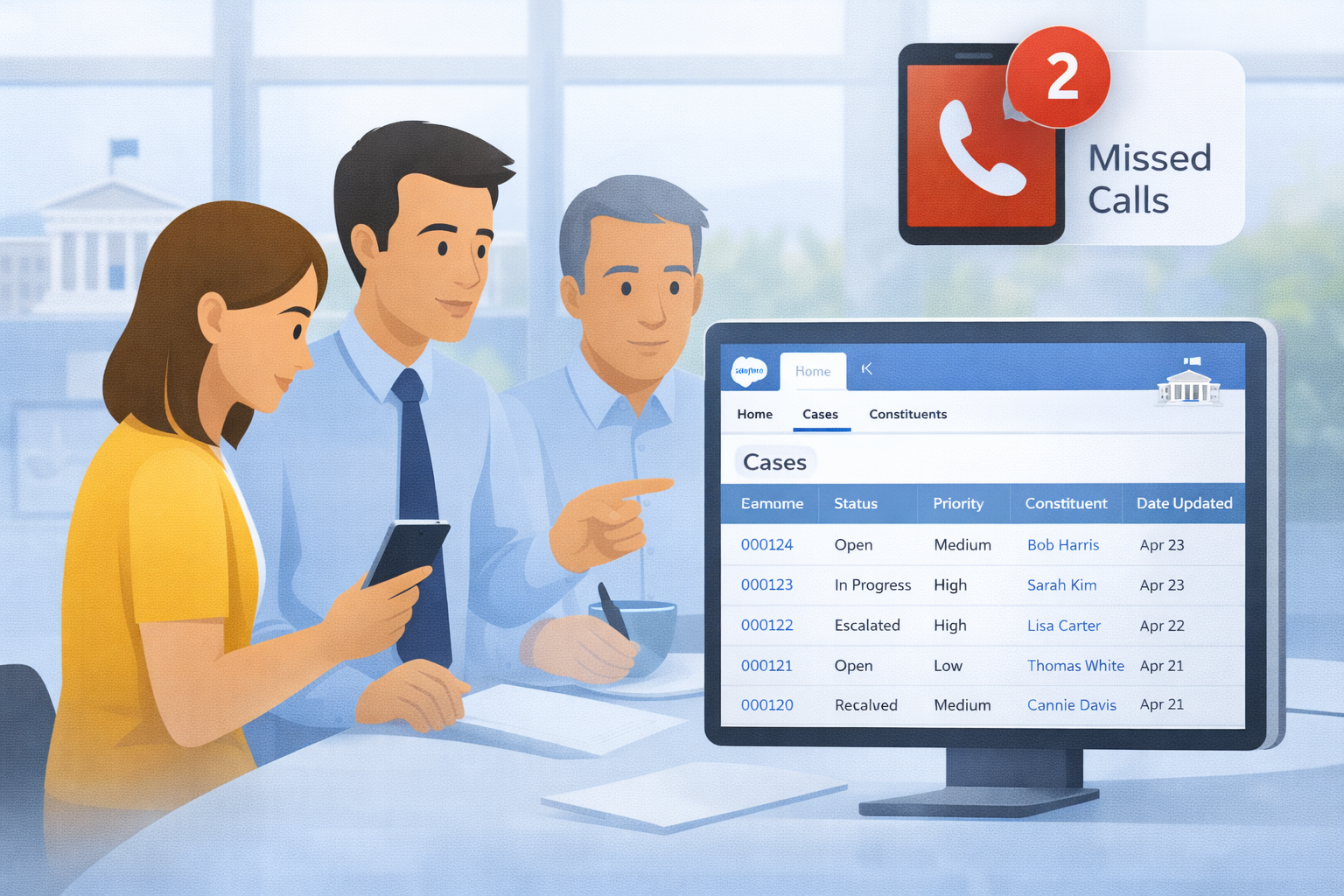
When agencies rely on a single communication channel, several challenges emerge:
- Increased inbound calls asking for status updates
- Slower response times due to manual follow-ups
- Inconsistent communication across departments
- Frustration for both constituents and staff
A multichannel engagement strategy allows agencies to meet constituents where they are, without creating fragmented systems. When communication is coordinated, agencies can deliver clearer updates, reduce repetitive work, and maintain a complete record of interactions.
What Multichannel Engagement Looks Like for Government Teams
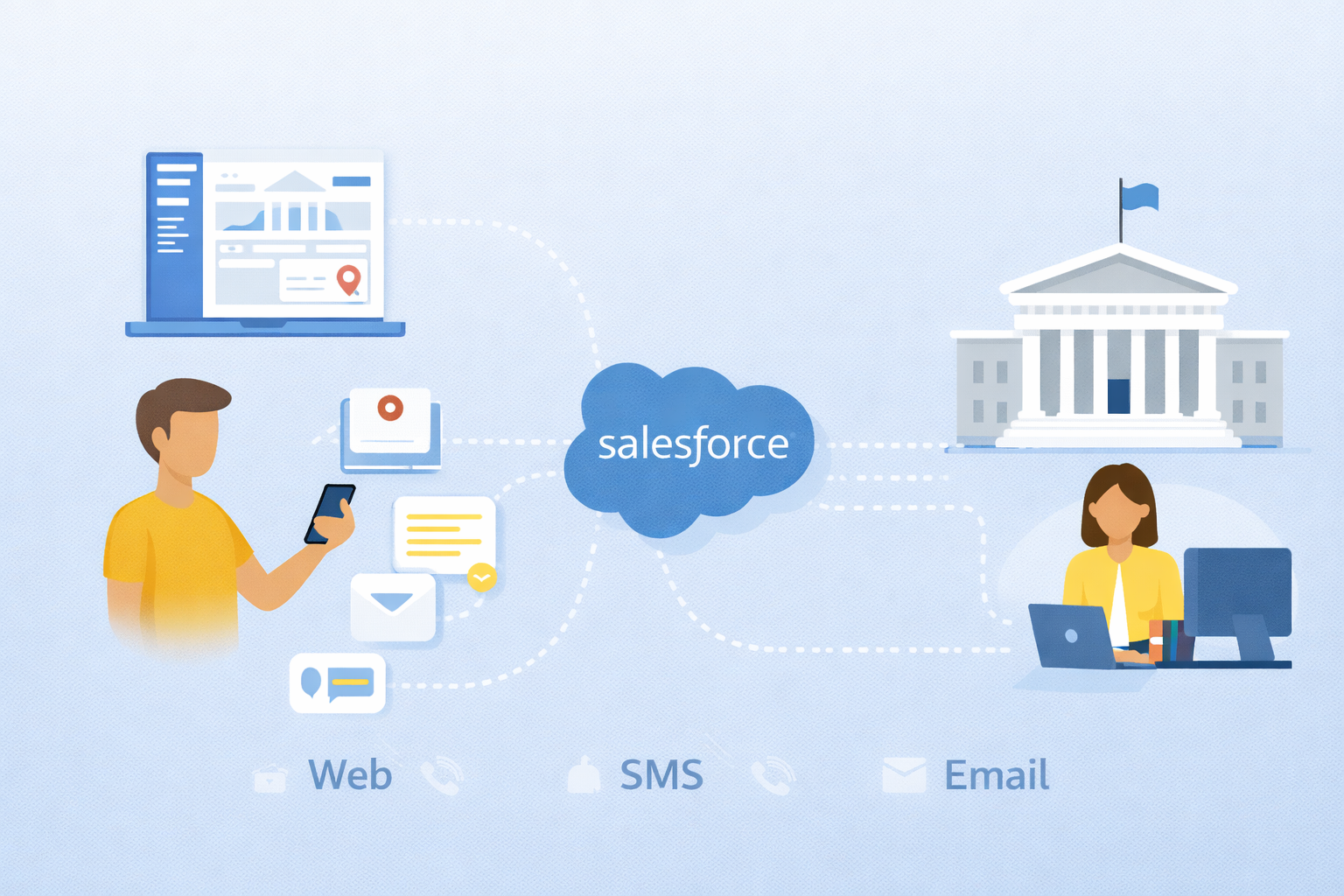
Multichannel engagement does not mean managing separate tools for each channel. In an effective model, all interactions are tied to the same case or service request within a central platform.
Common engagement channels for public sector organizations include:
- Online portals and digital forms
- Call centers and voice support
- SMS and MMS messaging
- Email notifications
- Field service updates
- Internal collaboration tools
When these channels are connected, staff can see the full context of each interaction. Constituents receive consistent updates regardless of how they choose to engage, and agencies gain visibility into service performance.
Salesforce as the Foundation for Multichannel Engagement
For many public sector organizations, Salesforce serves as the system of record for constituent data, service requests, and workflows. Salesforce Public Sector Solutions, Service Cloud, and Experience Cloud provide the foundation for coordinating engagement across departments and channels.
Using Salesforce as the core platform allows agencies to:
- Centralize constituent and case data
- Automate intake, routing, and escalation
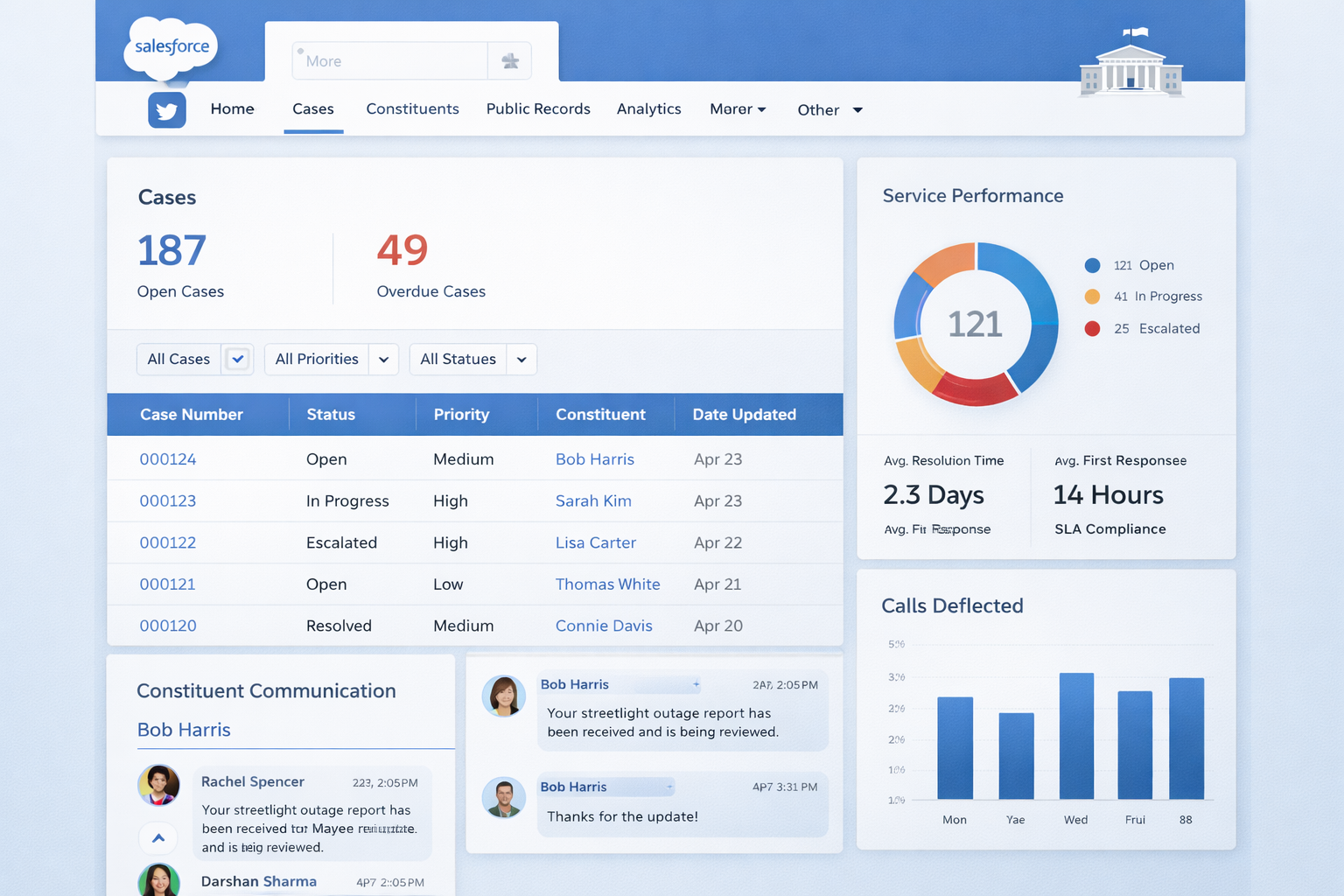
- Track response times and resolution metrics
- Maintain audit trails and compliance controls
- Generate reporting across programs and teams
Salesforce also enables agencies to extend engagement beyond traditional channels, which is increasingly important as mobile communication becomes a preferred method for timely updates.
The Role of SMS and MMS in Constituent Communication
Mobile messaging has become an important component of constituent engagement, particularly for time-sensitive and transactional communication. SMS and MMS are well suited for short updates that require quick visibility and, in some cases, a simple response.
Public sector messaging use cases include:
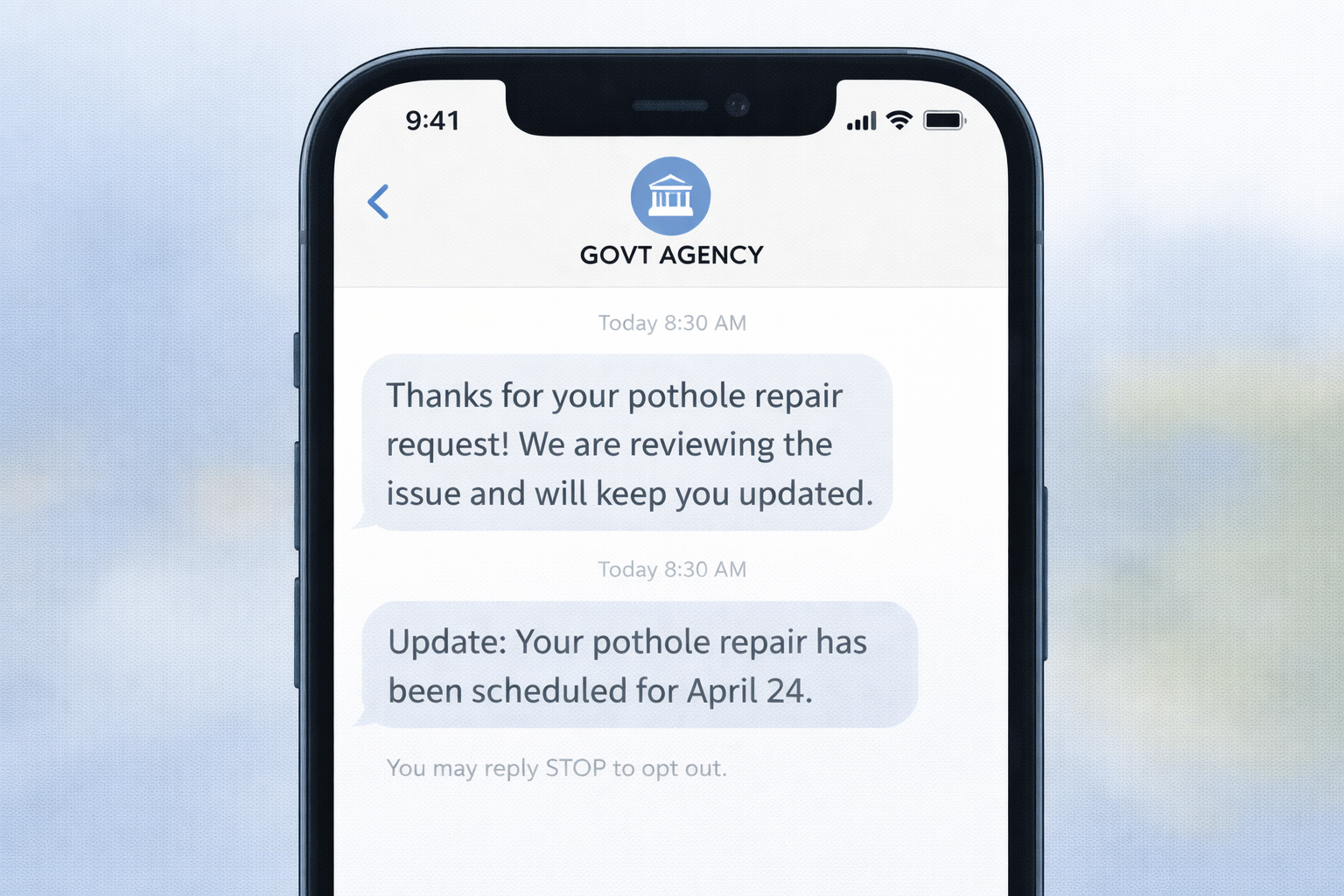
- Service request confirmations and status updates
- Appointment and inspection reminders
- Emergency notifications and advisories
- Survey and feedback collection
- Payment, renewal, or compliance reminders
Because text messages are typically read within minutes, they can reduce missed appointments, improve response rates, and lower call volumes. When messaging is integrated directly into Salesforce, these interactions become part of the official service record rather than isolated communications.
For agencies exploring how SMS fits into Salesforce workflows, this overview of Salesforce-native messaging provides helpful context: https://www.mogli.com/blog/salesforce-sms
Designing a Practical Multichannel Strategy
Public sector teams often hesitate to expand communication channels due to concerns around complexity, governance, and compliance. A phased approach focused on clear use cases can help agencies move forward confidently.
Step 1: Identify High-Impact Use Cases
Start with services that generate the highest call volume or delays, such as 311 requests, inspections, or appointment scheduling.
Step 2: Map the Constituent Journey
Understand where communication currently occurs and where digital or mobile channels could reduce friction. Identify which updates can be automated and which require staff involvement.
Step 3: Establish Data and Governance Standards
Ensure constituent data, consent preferences, and communication history are managed within Salesforce. Define policies for message frequency, escalation, and auditability.
Step 4: Introduce Messaging Thoughtfully
Begin with confirmation and reminder messages before expanding to more interactive scenarios. Agencies new to SMS can benefit from reviewing general best practices around message timing, clarity, and consent: https://www.mogli.com/blog/sms-marketing
Step 5: Measure and Refine
Track metrics such as response time, resolution rates, message engagement, and call deflection. Use these insights to refine workflows and expand the strategy.
Supporting Staff While Improving Constituent Experience
A well-designed multichannel engagement strategy supports internal teams as much as it benefits constituents. When communication is centralized and automated:
- Service agents spend less time responding to routine status inquiries
- Field teams receive clearer, real-time information
- Supervisors gain better visibility into workloads and performance
- Agencies can scale service delivery without increasing staff
This balance between efficiency and service quality is especially important for public sector organizations managing limited resources.
Selecting Messaging Tools That Fit Public Sector Needs
Not all messaging tools are designed with public sector requirements in mind. Agencies should consider security, compliance, scalability, and how well a solution integrates with existing systems.
Messaging solutions that operate natively within Salesforce simplify governance by ensuring all communication is logged, searchable, and tied to the appropriate records. For teams evaluating options, this comparison of SMS messaging applications offers a helpful overview of the landscape:
https://www.mogli.com/blog/best-sms-marketing-apps
Moving Toward a More Connected Engagement Model
Multichannel constituent engagement is not a one-time initiative. It is an ongoing capability that evolves as constituent expectations, technology, and agency needs change.
By using Salesforce as a centralized platform and extending it with mobile messaging channels such as SMS and MMS, public sector teams can create a connected, transparent, and scalable engagement model. Starting with high-impact use cases and expanding over time allows agencies to improve service delivery while maintaining control and compliance.
As digital expectations continue to rise, agencies that invest in coordinated multichannel engagement will be better positioned to serve their communities effectively and equitably.


